
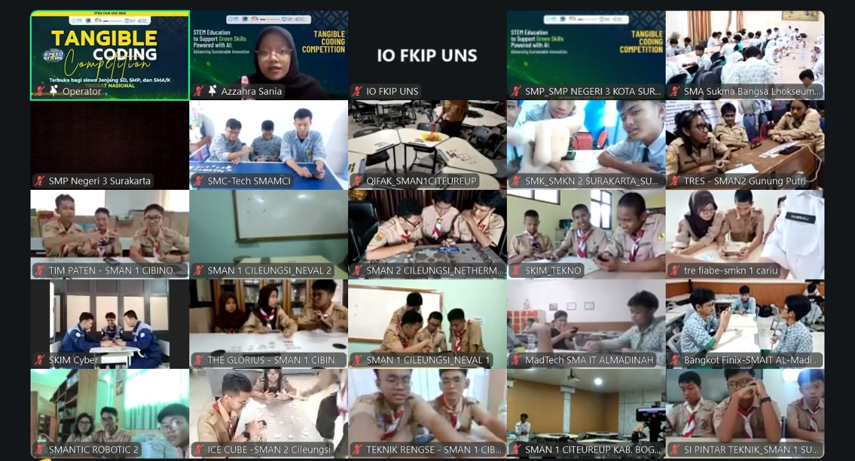
Surakarta, September 30, 2026 – The International Office of the Faculty of Teacher Training and Education (FKIP), Universitas Sebelas Maret (UNS), successfully organized the Tangible Coding Competition 2026 as part of the STEM Fair UNS 2026 series on Wednesday, September 30, 2026. This national-level Tangible Coding Competition was joined by 261 teams from elementary, junior high, and senior high/vocational high school levels. Based on Tournament data, the elementary school category was joined by 59 teams, the junior high school category by 97 teams, and the senior high/vocational school category by 105 teams. With four students in each team, the entire competition involved 1,044 students, consisting of 236 elementary school students, 388 junior high school students, and 420 senior high/vocational school students.
Participants came from various regions in Indonesia. In addition to Solo/Surakarta and Jakarta, the competition was joined by many teams from Aceh, especially Bireuen, Pidie, and Lhokseumawe. Tournament data also showed the participation of teams from Sukoharjo and several areas in West Java, including Gunung Putri, Cileungsi, Cibinong, Citeureup, Sukaraja, Cariu, and Karawang. This regional reach brought together more than a thousand students from diverse school backgrounds in one competition based on STEM, coding, and computational thinking.
The opening series also featured remarks from Dr. Imam Sujadi, M.Si., as Dean of FKIP UNS, and Ryan le Roux, Founder of Leva Foundation. Both remarks were part of the opening of the Tangible Coding Competition 2026 before participants entered the match series in each level.
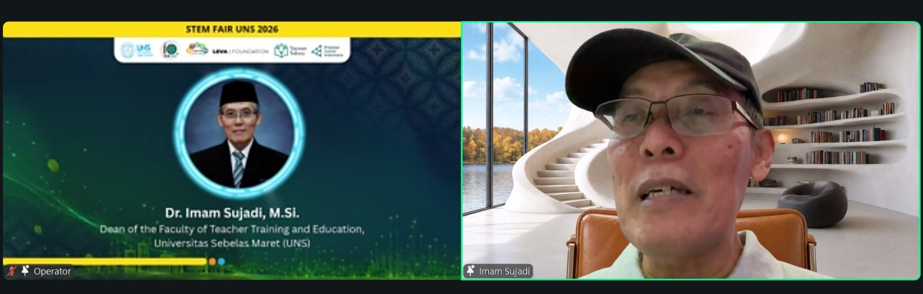
Figure 1. Dr. Imam Sujadi, M.Si., Dean of FKIP UNS, delivers remarks during the opening series.
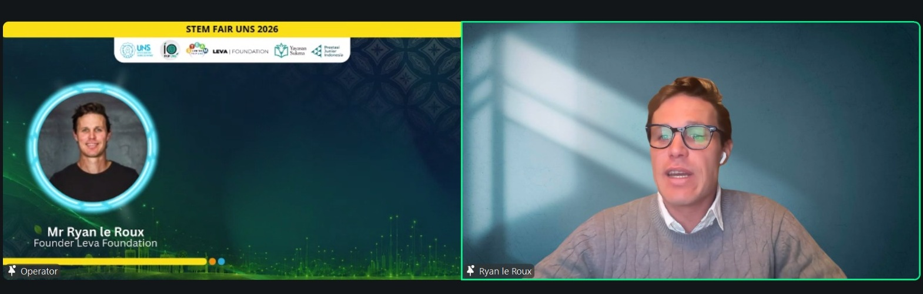
Figure 2. Ryan le Roux, Founder of Leva Foundation, delivers remarks at the Tangible Coding Competition 2026.
The Tangible Coding Competition is designed to provide space for students to apply computational thinking and problem-solving through coding games based on tangible tokens. The competition also encourages participants to develop precision, strategic efficiency, debugging skills, and teamwork.
All matches used the SPEED STARS game with physical tokens from the Tangible Rangers Kit. In this game, participants had to guide the car past the finish line according to the conditions in each stage. To achieve this goal, participants needed to read the board conditions, pay attention to the car’s position and facing direction, recognize obstacles, determine a path, and then arrange a sequence of instructions using physical tokens.
The arranged token sequence was then scanned using the participants’ device. If the strategy had not produced the correct solution, participants had to evaluate the results and improve the algorithm they had created. This process placed students as problem solvers who needed to think systematically, logically, and collaboratively in completing each challenge.
Before the competition, participants attended a Technical Meeting on September 28, 2026, via Zoom Meeting. The matches were then held online on September 30, 2026, with sessions divided by level. The Elementary School category competed from 09:00 to 10:00 WIB (Western Indonesian Time), the Junior High School category from 11:00 to 12:00 WIB, and the Senior High/Vocational School category from 15:00 to 16:00 WIB.
Although held online, the match mechanism was still designed to be competitive and monitored. Each team used a main device to run the Tournament application and scan the token arrangement, while another device was used for supervision via Zoom. All team members, the worktable, tokens, and the main device had to remain visible during the match.
Ranking was determined in stages. The number of levels successfully completed was the main criterion. If there were teams with the same number of levels, ranking was determined by the fewer number of attempts. If both criteria were still the same, faster completion time became the deciding factor. Data in the Tournament system served as the basis for assessment and was then verified by the committee.
After the entire series of matches was completed, the committee named First Place, Second Place, and Third Place in each category as follows:
Elementary School Category
- First Place: SD Sukma Bangsa Bireuen Team 1
- Second Place: SD ICT Al Abidin Surakarta Team 2
- Third Place: SD ICT Al Abidin Surakarta Team 1
Junior High School Category
- First Place: SMP Sukma Bangsa Bireuen Team 3
- Second Place: SMP Negeri 4 Kota Surakarta Team 3
- Third Place: SMP IT Nur Hidayah Surakarta Team 2
Senior High/Vocational School Category
- First Place: SMA Sukma Bangsa Pidie Team 5
- Second Place: SMA Sukma Bangsa Bireuen Team 1
- Third Place: SMA Sukma Bangsa Pidie Team 3
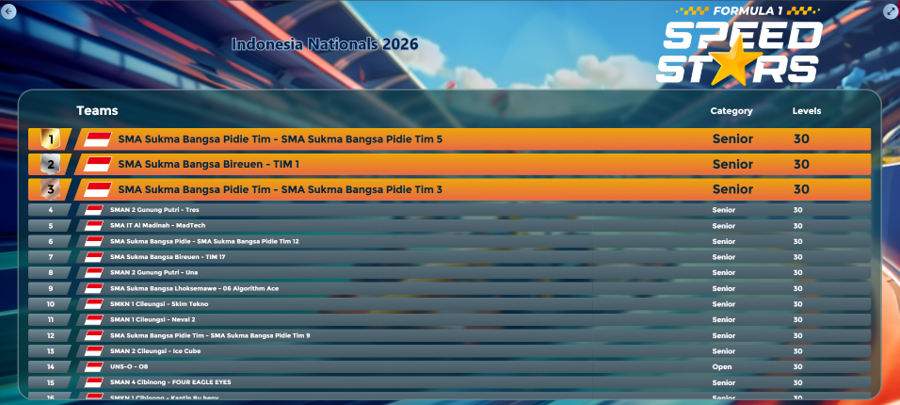
Figure 3. Ranking results display for the Senior High/Vocational School category at SPEED STARS Indonesia Nationals 2026, with the top three teams from SMA Sukma Bangsa Pidie and SMA Sukma Bangsa Bireuen.
Through the Tangible Coding Competition 2026, the International Office of FKIP UNS presented a competition space oriented not only toward final results but also toward participants’ thinking processes. Students were required to devise strategies, develop algorithms, test solutions, find errors, and make improvements collaboratively.
The participation of 1,044 students grouped into 261 teams demonstrates the broad enthusiasm of schools for STEM- and coding-based learning activities. Participants came from Solo/Surakarta, Jakarta, various regions in Aceh such as Bireuen, Pidie, and Lhokseumawe, as well as other areas such as Sukoharjo, Gunung Putri, Cileungsi, Cibinong, Citeureup, Sukaraja, Cariu, and Karawang. This competition is expected to broaden students’ learning experiences while encouraging the development of computational thinking skills relevant to the needs of education in the digital era